Connect with us
194 High Street, Newburyport, Massachusetts 01950 | Phone: 978.465.5358

Men’s Dental Health ( Part 2 of 2 )

Posted on: May 8th, 2012 by DPON No Comments

Dad’s a busy guy, and his healthcare routine may be one of the first things to be neglected in his dash through the day. Overall, men are less likely than women to take care of their physical health, and – according to recent surveys and studies – their oral health is equally ignored.
Good oral health recently has been linked with longevity. Yet, one of the most common factors associated with infrequent dental checkups is just being male.
Men are less likely than women to seek preventive dental care and often neglect their oral health for years, visiting a dentist only when a problem arises.
When it comes to oral health, statistics show that the average man brushes his teeth 1.9 times a day and will lose 5.4 teeth by age 72. If he smokes, he can plan on losing 12 teeth by age 72. Men are also more likely to develop oral and throat cancer.
Most people know that neglecting oral health means risking cavities and gum disease. In recent years however, researchers also have found a connection between gum disease and coronary vascular disease, which can place people at risk for heart attacks and strokes. In individuals with diabetes, gum disease is associated with poor control of insulin levels.
People who have healthy, active lifestyles seem to have fewer dental problems, while those who have poor eating habits, smoke and consume alcohol on a regular basis have an unhealthier lifestyle with increased periodontal pocketing.
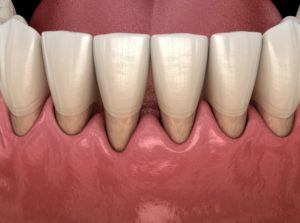
Lifestyle greatly affects increased periodontal pockets; these “pockets” are gaps where the gums have receded away from the teeth, exposing the roots. Lifestyle is measured by questioning subjects about dietary habits, smoking habits, alcohol consumption and physical activity. Someone who does not brush and floss or visit their dentist regularly has the potential to increase the amount of tartar and decay in their mouth. This can lead to gum bleeding, severe gingivitis and eventually periodontal disease. Periodontal pocketing increases with diminished toothbrushing frequency and an unhealthy lifestyle. Men do have more periodontal pockets than women, generally because women’s dental health habits are better than men’s.
A smoker who has adverse eating habits and consumes alcohol on a fairly regular basis is more likely to be an irregular toothbrusher and is obviously not as concerned about their basic health as a nonsmoker who exercises and is more apt to brush and floss regularly.
So if you are practicing a healthy diet with regular exercise, and are a nonsmoker with a low consumption of alcohol, then you generally have a healthier lifestyle that includes a higher toothbrushing frequency.

Men’s Dental Health ( Part 1 of 2 )

Posted on: May 1st, 2012 by DPON No Comments

Although most people have some oral health problem at some point in their lives, men of all ages are more likely than women to have more periodontal disease. A recent survey found that 34 percent of males aged 30 to 54 had periodontitis, compared to 23 percent of females. And, 56 percent of males aged 55 to 90 have periodontitis compared to 44 percent of females.
Statistics show that approximately one-third of American men have not had a checkup in the past year. Men make 150 million fewer trips to the doctor than women because they are afraid or embarrassed to go. Statistics show that men only brush their teeth 1.9 times per day.
Why is periodontal disease a problem?
Periodontal disease is a result of plaque, which hardens into a rough, porous substance called tartar. The poisons produced and released by bacteria found in tartar irritate gums. These toxins cause the breakdown of fibers that anchor the gums tightly to the teeth, creating periodontal pockets that fill with even more toxins and bacteria. The disease potentially may result in more serious health consequences, such as diabetes. See your dentist if you have any of these symptoms:
• Bleeding gums during brushing
• Red, swollen or tender gums
• Persistent bad breath
• Loose or separating teeth
Do you take medications?
Since men are more likely to suffer from heart attacks, they also are more likely to be on medications that can cause dry mouth. If you take medication for the heart or blood pressure, or if you take anti-depressants, your salivary flow could be inhibited, increasing the risk for dental caries. Saliva helps to reduce the bacteria found in your mouth.
Do you use tobacco?
If you smoke or chew, you have a greater risk for gum disease and oral cancer. Men are affected twice as often as women, and 90 percent of oral cancers occur in those over 45 years of age.
The most frequent oral cancer sites are the tongue, the floor of the mouth, soft palate tissues in back of the tongue, lips, and gums. If not diagnosed and treated in its early stages, oral cancer can spread, leading to chronic pain, loss of function, irreparable facial and oral disfigurement following surgery, and even death. More than 8,000 people die each year from oral and pharyngeal diseases. If you use tobacco, it is important to see a dentist frequently for cleanings and to ensure your mouth remains healthy. Your general dentist can perform a thorough screening for oral cancer.
Do you play sports?
If you participate in sports, you have a greater potential for oral and dental trauma to your teeth. If you play contact sports, such as football, soccer, basketball, and even baseball, it is important to use a mouthguard, which is a flexible appliance made out of plastic that is worn in athletic and recreational activities to protect teeth from trauma. If you ride bicycles or motorcycles, wear a helmet.

A Comparison ( Part 2 of 2 )

Posted on: April 26th, 2012 by DPON No Comments

If you missed last weeks column, go back and take a look at it. We took a closer look at the controversy of dental amalgam. This week we’ll do a brief comparison of the two most common materials to restore teeth.
Amalgam’s advantages
• Silver amalgam is a more durable tooth filling material than composite resin in teeth that are subjected to a lot of biting pressure.
• An amalgam filling costs considerably less than a comparable composite filling.

The disadvantages of amalgam
• Silver fillings are less attractive than tooth-colored composite resin fillings; for this reason, they’re typically not placed in teeth located near the front of your mouth.
• The mercury in amalgam fillings expands and contracts with heat and cold (think of the mercury in a thermometer). This can eventually cause the filling to fracture your tooth, so a crown will be required to restore its functionality.
• Silver fillings will eventually corrode and leak, which can cause new decay to develop underneath the filling. The leakage can also give a gray appearance to the entire tooth.

Tooth-colored composite resins—the pros and cons
Resin fillings result in a natural-looking smile. The color can be closely matched to your natural teeth, so the restorations are nearly undetectable. And because the resin compound actually bonds to your tooth, they make the tooth stronger than those restored with amalgam.
Composite resin fillings can also be made much smaller than an amalgam filling used to restore the same amount of decayed tooth, so less natural tooth structure is lost. The durability of resin tooth-filling material has not been time-tested, but continual improvements in the product have made resins nearly as durable as amalgam fillings.
So where’s the catch?
In the cost. A resin filling costs about 50 to 100 percent more than a comparable silver filling. Most insurance benefits don’t cover the additional cost of composite fillings, so you must pay the difference. Do you think your insurance company really cares about you?
Which to choose?
Overall, resin fillings are a more conservative treatment, because less of your natural tooth structure needs to be removed in preparation for their placement. They also do a better job of protecting your tooth in the long run, as there’s less chance that your tooth will fracture and require a crown in the future.
Ultimately, the choice is a personal one for both dentists and patients. Do amalgam’s benefits outweigh the possible risks? Are tooth-colored fillings worth the significant extra cost? Which filling material will prove to be most cost-effective in the long run? We recommend that you research your options, discuss them with your dental healthcare providers, and choose the filling material that’s right for you, based on what you’ve learned.

Dental Amalgam ( Part 1 )

Posted on: April 19th, 2012 by DPON No Comments

Silver amalgam and composite resin are the two most common materials used to restore teeth damaged by decay. There are situations where one material is preferable over the other, and similarly, there are disadvantages to both of these filling materials. Additionally, there are some health experts who question the safety of amalgam fillings and say they should not be used under any circumstances.
The American Dental Association’s official position regarding silver amalgam is that it is a “safe, durable and cost-effective material that dentists have used in tooth restorations for more than 150 years.” But there are some practitioners who have expressed serious concern over the safety of amalgams, and the controversy over its use continues.
It’s the fact that amalgam is composed of 35 percent silver, 15 percent tin or tin mixed with copper, a trace of zinc, and 50 percent mercury—a highly toxic heavy metal. It is also a fact that the only two places to dispose of mercury are in a toxic waste dump and your mouth.
Anti-amalgam dentists point out that the amalgam releases mercury vapor when there is friction on the surface of the filling, such as when you chew. Mercury vapor is cyto-toxic, which means that it kills cells, even when the exposure is minute.
Mercury is absorbed through the lungs and into the arterial blood and is stored by your body, primarily in your kidneys, liver and brain. And no level of this mercury vapor is considered safe. However, the ADA counters that, once bound to the other metals, the mercury in dental amalgam is completely harmless.
While it is highly unlikely that such small concentrations of mercury can or do harm the typical human, there is a remote chance that persons who have immunocompromised systems could have some negative influence from this mercury presence, or the presence of other metals
It’s important to note that no controlled scientific studies have been conducted that demonstrate ill effects to human health resulting from amalgam fillings. The evidence, to date, is all anecdotal. The World Health Organization has stated that it recognizes the importance of continued monitoring of the safety and effectiveness of all dental restorative materials, including dental amalgam.
Next week we will compare silver amalgam and composite resin.

Pregnancy and Dental Health

Posted on: April 2nd, 2012 by DPON No Comments

It’s a myth that calcium is lost from the mother’s teeth and “one tooth is lost with every pregnancy.” But you may experience some changes in your oral health during pregnancy. The primary change is a surge in hormones-particularly an increase in estrogen and progesterone-which is linked to an increase in the amount of plaque on your teeth.
How does a build-up of plaque affect me?
If the plaque isn’t removed, it can cause gingivitis-red, swollen, tender gums that are more likely to bleed. So-called “pregnancy gingivitis” affects most pregnant women to some degree, and generally begins to surface in the second trimester. If you already have gingivitis, the condition is likely to worsen during pregnancy. If untreated, gingivitis can lead to periodontal disease, a more serious form of gum disease.
Pregnant women are also at risk for developing pregnancy tumors, inflammatory, benign growths that develop when swollen gums become irritated. Normally, the tumors are left alone and will usually shrink on their own. But if a tumor is uncomfortable and interferes with chewing, brushing or other oral hygiene procedures, the dentist may decide to remove it.
How can I prevent these problems?
You can prevent gingivitis by keeping your teeth clean, especially near the gumline. You should brush with fluoride toothpaste at least twice a day and after each meal when possible. You should also floss thoroughly each day. If toothbrushing causes morning sickness, rinse your mouth with water or with anti-plaque and fluoride mouthwashes. Good nutrition-particularly plenty of vitamin C and B12-help keep the oral cavity healthy and strong. More frequent cleanings from the dentist will help control plaque and prevent gingivitis. Controlling plaque also will reduce gum irritation and decrease the likelihood of pregnancy tumors.
When should I see my dentist?
If you’re planning to become pregnant or suspect you’re pregnant, you should see a dentist right away. Otherwise, you should schedule a check-up in your first trimester for a cleaning. Your dentist will assess your oral condition and map out a dental plan for the rest of your pregnancy. A visit to the dentist also is recommended in the second trimester for a cleaning, to monitor changes and to gauge the effectiveness of your oral hygiene. Depending on the patient, another appointment may be scheduled early in the third trimester, but these appointments should be kept as brief as possible.
Are there any procedures I should avoid?
Nonemergency procedures generally can be performed throughout pregnancy, but the best time for any dental treatment is the fourth through six month. Women with dental emergencies that create severe pain can be treated during any trimester, but your obstetrician should be consulted during emergencies that require anesthesia or when medication is being prescribed. Only X-rays that are needed for emergencies should be taken during pregnancy. Lastly, elective procedures that can be postponed should be delayed until after the baby’s birth.

Sensitive Teeth

Posted on: March 9th, 2012 by DPON No Comments

If you occasionally experience a sudden flash of pain or a mild tingling when you bite into something sweet or sour or drink hot or cold beverages, you may have sensitive teeth. Pain from sensitive teeth usually comes and goes, while constant pain could be a sign of a more serious problem.
The problem usually begins when the gums start to recede. The gums are insulation for the roots of teeth. There are many theories as to why gums recede. Some of those theories include genetics, heavy-handed toothbrushing, poor oral hygiene and some bite related issues. Regardless of the etiology behind why the gums recede, once it’s gone, it will not grow back. It many cases, replacing areas of recession with tissue grafting is necessary.
In healthy teeth, there are a few layers of various kinds of material. The dentin, which is under enamel, is a porous material, which is both protected by the enamel and gums. If dentin is exposed, heat, cold and other irritants are transmitted through the pores of the dentin to where the pulp or nerve of the tooth is.
Cracks in teeth can also cause them to be sensitive. Along with being cold sensitive, the symptoms are usually also accompanied by pain on chewing. People will tend to report that they have noticed an increase in cold sensitivity in addition to pain when chewing something hard. Although this is typically seen in teeth with moderate to larger fillings, cracks can occur in teeth with smaller fillings and sometimes teeth that have never had a filling.
So, how do you avoid all of this? Obviously, you know my first suggestion is going to be to make sure you see a dentist on a regular basis. Second is exceptional home care. Most dentists are fans of good electric toothbrushes. It is harder to abuse your gums with an electric toothbrush than a manual one. It takes about two minutes to properly brush all the surfaces of the teeth……and don’t forget to floss.
What treatments are available for sensitive teeth? It depends on the problem. If it is exposed dentin, the treatments are usually one or combination of the following: soft-bristled toothbrush, toothpaste for sensitive teeth, high fluoride toothpaste and/or rinse, dentist applied desensitizer, gum grafting. If the problem is a crack in the tooth, you’re probably looking at a crown or partial crown to cover the area of the tooth that is cracked.

Spit Please

Posted on: March 1st, 2012 by DPON No Comments

Would you rather spit into a cup or have a needle stuck in your arm to draw blood to check for or monitor diseases? Well, you may be in luck.
Researchers are working on developing tests that can be done with saliva, rather than blood. The reason? Other than the obvious that it is less painful than blood testing, it is easier because everyone’s got saliva and some have hard-to-find veins, and it may even be possible to track real-time physiologic changes. Because of the ease of obtaining saliva, doctors would be able to get as many samples during a day as they want to be able to monitor things such as how a particular infection is responding to antibiotic treatment.
Researchers say that they have already identified about 3000 pieces of RNA in saliva, of which when four particular ones are present, indicate a 91 percent chance of current oral cancer. They are unsure however, if these bits of RNA were present simply as an inflammatory response to the cancer or if their corresponding genes were actually activated.
The National Center for Dental and Craniofacial Research is currently putting together a complete catalogue of all of the proteins in saliva. By identifying the normal levels of particular proteins in saliva, tests can be made to tell whether certain protein levels are abnormal.
It was only a few years ago that the technology to analyze minute quantities of genetic material and proteins in saliva became usable. As the technology advances, more sophisticated tests will be able find out if you are at risk for things such as breast and ovarian cancer, diabetes, Alzeimer’s disease and rheumatoid arthritis.
It may even be possible to implant a tiny chip in your cheek to monitor levels of specific proteins and warn you or your doctor if the levels become abnormal. This would be ideal to monitor proteins such as C-reactive protein which is elevated in people with an increased risk of heart disease. It is also elevated in people with periodontal disease. The C-reactive protein is higher when chronic inflammation is present. Periodontal disease is chronic inflammation. This is how periodontal disease has been linked to heart disease.
The technology and research behind salivary testing has a long way to go. However, some day it may become acceptable to spit into a cup.

We Need Your Help

Posted on: February 23rd, 2012 by DPON No Comments

I have talked before about how only 50% of the population sees a dentist on a regular basis. Based on feedback I have gotten, those that read this column on a regular basis, also probably make up most of those that frequent the dentist. Therefore, this column may be “preaching to the choir” but it is the “choir” that needs to help the rest of the population. What I am trying to say is that dentists can educate their patients but they can’t educate the people that don’t go. Sure, they can write columns in newspapers to try to reach larger audiences, but if a dentist has 1500 patients, they can also be 1500 spokespeople for dentistry.
Let’s look at an example in a different context. One of your friends says to you, “We went to a restaurant last night and had an amazing meal. The staff was very pleasant and the entire atmosphere was very enjoyable. This was a great find and our new favorite restaurant.” Chances are, you’d take that friend up on his recommendation and go to that restaurant with high expectations.
Dentists not only rely on new patients to maintain a healthy business, but I would assume that most also feel it is their mission to make people healthier in general. There are such a large number of people out there that need to be educated about dental health and how to lead a healthier life in general. Yes, people can read and watch television to get information, but if they get a strong recommendation from a friend or family member, they are more likely to listen.
Unlike a great restaurant or movie, dentistry or a specific dentist, is generally not something people rave about to friends, family or co-workers. So this is an invitation to you. This is an invitation to bring dentistry up in conversation. Teach others about what you have learned from your dentist and even from this column. Talk about the health benefits of going to the dentist on a regular basis. Talk about how your body and mouth can feel healthy but not necessarily be healthy. Talk about “silent” diseases and how important early detection is and how it can save your life.
Then, talk about how great your dentist is and how much you love the staff. Recommend your dentist to your family, friends and co-workers. Help us be advocates for a healthier life.

Dear Doctor

Posted on: February 15th, 2012 by DPON No Comments

This week I would like to share an e-mail letter from a person who read one of my columns on dental amalgam. Following the excerpt from the letter, I will briefly discuss my thoughts.
“I read your article on safety of amalgam (fillings) with great interest. May I share my personal experience?
At age 50 I suddenly developed ulcerative colitis. (A condition that affects control of the bowels). I lost 30 pounds in the first month. I took the usual prednisone and other steroids, which nearly wrecked me, though slowed the colitis. The doctor told me that colitis is incurable, no one knows why you get it, and all you can do is take the meds for the rest of your life.
Then I received a call from a friend who said he’d had the same problem, had his amalgam (fillings) out, went through chelation, and was cured. I laughed him silly. When I quit laughing, I specifically researched information on what he told me. I found a dentist who followed Huggins’ protocol for removal and detox. (Huggins was a dentist from Colorado who had his license revoked in 1996 for basically over-diagnosing and over-treating people with amalgam fillings in an attempt to “cure” a host of different medical problems)
I had them out, and six months later, the colitis had subsided enough for me to start leaving the house for more than 30 minutes at a time. I did nothing with traditional meds, except quit taking them. The only thing I did different was take chelation supplements, and I have returned to a normal life.
I hope you are a dentist that is truly interested in real facts, and real progress, because this is an issue crying out to be removed from the chains of government and medical agencies more interested in the bank accounts than our health.”
Wow! Well, I am interested in real facts and real progress. I think it is great that a person went from a basically debilitating problem back to normal life. After I read this I did a brief search on the internet. As with just about every topic on the internet, there was tons of information, including information on amalgam in relation to Autism, Parkinson’s disease, etc.
Despite the fact that there is no “scientific” data that shows that dental amalgam causes any kind of health problems, there are plenty of people out there who have described health benefits from its removal. We must keep in mind that different things cause different reactions in different people. We must make intelligent decisions based on the different sources of information we get.

Brighter Smiles

Posted on: January 20th, 2012 by DPON No Comments

DENTAL TRIVIA

Here are some facts I came across recently I found interesting:
• There are almost 9,000 accidental pokings and piercings with toothpicks per year.
• At least 20 new ideas for tooth care devices appeared in the magazine Popular Mechanics between 1920 and 1930.
• According to Consumer Reports, dentists are among the five most trusted professionals in the United States.
• Approximately $2 billion a year is spent on dental products, including toothpastes, mouthwashes and dental floss.
• Approximately 94% of Americans say they brush nightly, while only 81% say they brush first thing in the morning….yuck!
• The earliest record of a toothbrush was found in Chinese literature from about 1600A..D.
• The first nylon bristles were introduced in 1938 and soon replaced the natural swine bristles…yuck!
• The electric toothbrush was first introduced in 1939.
• In 1873, Colgate introduced a form of toothpaste closest to what we use today in the way of an aromatic toothpaste in a jar. In 1896, Colgate Dental Cream was the first to be packaged in collapsible tubes.
• Folklore states that types of dental floss and toothpick grooves were observed in the skulls of prehistoric humans and early Native Americans.
• Dental floss was not commercially available until 1882, when the Codman and Shurtleft company of Randolph, Massachusetts produced unwaxed silk floss.
• In the United States, close to 3 million miles of dental floss is purchased each year.
All previously written columns can be found at www.dentalhealthforlife.com. If there are certain topics you would like to see written about or questions you have please email them to me at jpstclair@dentalhealthforlife.com.